
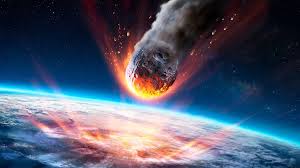
Asteroids are among the most fascinating objects in our solar system. These rocky bodies orbit the Sun and provide valuable clues about the formation and evolution of planets. Although they are often overshadowed by planets, moons, and comets, asteroids play a significant role in helping scientists understand the history of the universe.
For centuries, humans have gazed at the night sky and wondered about the countless objects moving through space. Among these objects, asteroids stand out because they are considered remnants of the early solar system. They have remained relatively unchanged for billions of years, making them important scientific treasures.
Today, advanced telescopes, spacecraft, and space missions have allowed scientists to study asteroids in greater detail than ever before. These studies have revealed valuable information about the origins of our solar system and the potential risks and opportunities that asteroids present to humanity.
What Is an Asteroid?
An asteroid is a small rocky object that revolves around the Sun. Unlike planets, asteroids are too small to develop a spherical shape due to their limited gravitational force. Most asteroids are irregularly shaped and vary greatly in size.
Some asteroids are only a few meters across, while others measure hundreds of kilometers in diameter. They are primarily composed of rock, metal, and various minerals. Because they are leftovers from the formation of the solar system approximately 4.6 billion years ago, they offer scientists a glimpse into the conditions that existed during the birth of the planets.
Asteroids are often referred to as minor planets because they share some characteristics with planets but are much smaller in size.
The Discovery of Asteroids
The discovery of asteroids marked an important milestone in astronomy. The first asteroid, known as Ceres, was discovered in 1801 by Giuseppe Piazzi. Initially, astronomers believed Ceres might be a missing planet located between Mars and Jupiter.
As telescopes improved, more similar objects were discovered in the same region of space. Over time, scientists realized that these objects formed a large population rather than a single planet. This led to the creation of the asteroid category.
Since the discovery of Ceres, millions of asteroids have been identified, and new ones continue to be discovered regularly through advanced observation techniques.
How Asteroids Formed
Scientists believe asteroids formed during the early stages of the solar system. When the Sun and planets were forming, countless particles of dust and gas surrounded the young star. These particles gradually combined to create larger bodies called planetesimals.
Many planetesimals eventually merged to form planets. However, in the region between Mars and Jupiter, the powerful gravitational influence of Jupiter prevented these objects from combining into a single planet. As a result, countless rocky fragments remained scattered throughout this area.
These leftover fragments became the asteroids we observe today. Because they have changed very little over billions of years, they serve as natural time capsules from the solar system’s earliest days.
The Asteroid Belt
The majority of known asteroids are located in a region called the asteroid belt, situated between the orbits of Mars and Jupiter. This vast area contains millions of rocky objects of varying sizes.
Contrary to popular belief, the asteroid belt is not densely packed. The distances between individual asteroids are often enormous, allowing spacecraft to travel through the belt safely.
The asteroid belt represents a unique region of the solar system where planetary formation was interrupted. Studying this area helps scientists understand why planets formed in some regions while remaining absent in others.
The asteroid belt remains one of the most important targets for astronomical research and exploration.
Types of Asteroids
Asteroids can be classified into several categories based on their composition. Understanding these categories helps scientists learn more about the materials present during the formation of the solar system.
Carbon-rich asteroids are among the most common. These dark-colored objects contain large amounts of carbon and are believed to be some of the oldest materials in the solar system.
Silicate asteroids consist mainly of rock and minerals. They are brighter than carbon-rich asteroids and are frequently found throughout the asteroid belt.
Metallic asteroids contain significant amounts of iron and nickel. These objects may represent the cores of ancient planetary bodies that were shattered during collisions billions of years ago.
Each type provides valuable information about the conditions and processes that shaped our cosmic neighborhood.
Asteroids and Earth
Asteroids occasionally pass close to Earth during their journeys around the Sun. Most pose no threat, but some are classified as near-Earth asteroids because their orbits bring them relatively close to our planet.
Scientists closely monitor these objects using sophisticated tracking systems. Observatories around the world work together to identify potentially hazardous asteroids and calculate their future paths.
The study of near-Earth is important because large impacts have occurred throughout Earth’s history. Evidence suggests that an asteroid impact contributed to the extinction of the dinosaurs approximately 66 million years ago.
While the probability of a major impact in the near future remains low, continued monitoring helps ensure that humanity is prepared for potential threats.
The Scientific Importance of Asteroids
Asteroids hold tremendous scientific value because they preserve information from the earliest stages of the solar system. Unlike planets, which have undergone significant geological changes, many remain relatively unchanged.
By studying asteroid composition, scientists gain insights into the materials that existed during planetary formation. These studies help answer questions about how planets formed and how life-supporting environments developed.
Asteroids may also contain organic compounds and water-bearing minerals. These discoveries have led researchers to explore the possibility that contributed essential ingredients for life on Earth.
Every new asteroid mission adds to humanity’s understanding of the universe and our place within it.
Space Missions to Asteroids
Modern space exploration has expanded our knowledge of asteroids dramatically. Several spacecraft have successfully visited, photographed, and even collected samples from these ancient objects.
One of the most significant missions was conducted by the NASA spacecraft OSIRIS-REx, which collected samples from the asteroid Bennu and returned them to Earth for analysis.
Another important mission was the Japanese spacecraft Hayabusa2, which successfully gathered samples from the asteroid Ryugu.
These missions allow scientists to study asteroid materials directly in laboratories, providing unprecedented insights into their composition and history.
Asteroids and Future Resources
Asteroids may play an important role in the future of space exploration and economic development. Many contain valuable metals such as iron, nickel, platinum, and other rare elements.
Scientists and entrepreneurs have discussed the possibility of asteroid mining as a future source of resources. Extracting materials from could support long-term space missions and reduce the need to transport resources from Earth.
Water found within some asteroids could also be converted into drinking water, oxygen, and rocket fuel. These resources may become essential for future settlements on the Moon, Mars, and beyond.
Although asteroid mining remains a developing concept, it represents an exciting possibility for future generations.
Challenges in Studying Asteroids
Despite advances in technology, studying presents significant challenges. Many asteroids are small, dark, and located millions of kilometers away from Earth.
Their irregular shapes and unpredictable rotations can complicate spacecraft landings and sample collection efforts. Additionally, the cost and complexity of space missions require years of planning and international cooperation.
Nevertheless, scientists continue developing innovative technologies to overcome these obstacles. Improved telescopes, artificial intelligence, and advanced spacecraft are making asteroid research more effective than ever before.
The Future of Asteroid Research
The future of asteroid research looks extremely promising. New missions are being planned to explore additional , gather samples, and study their physical properties.
Advances in observation technology will allow astronomers to discover more asteroids and track their movements with greater accuracy. Researchers also hope to learn more about the role asteroids played in delivering water and organic materials to Earth.
As humanity expands its presence in space, asteroids may become important destinations for exploration, scientific study, and resource utilization.
Continued investment in asteroid research will deepen our understanding of the solar system while helping protect Earth from potential impacts.
Conclusion
Asteroids are far more than simple rocks floating through space. They are ancient remnants of the solar system’s formation, preserving valuable information about our cosmic origins. Through scientific research, space missions, and advanced observation techniques, humanity has gained remarkable insights into these fascinating objects.
The study of asteroids not only helps us understand the past but also prepares us for the future. From protecting Earth against potential impacts to providing resources for future space exploration, may play a crucial role in humanity’s continued journey beyond our planet.
As technology advances and exploration expands, these mysterious space rocks will continue revealing secrets that deepen our understanding of the universe and our place within it.