
Haircuts play an important role in personal appearance and self-confidence. Among the most popular modern hairstyles, taper and fade haircuts have become favorites taper vs fade for men of all ages. These styles offer a clean, stylish, and versatile look that can be adapted to different hair types, face shapes, and personal preferences.
Despite their popularity, many people confuse a taper haircut with a fade haircut. While both styles involve gradually shortening hair from the top toward the sides and back, they are not the same. Understanding the differences between a taper and a fade can help you choose the haircut that best suits your lifestyle and appearance goals.
In today’s grooming culture, the right haircut can enhance facial features, improve overall style, and create a polished image. Whether you prefer a professional appearance or a bold modern look, knowing the characteristics of taper and fade haircuts is essential.
What Is a Taper Haircut?
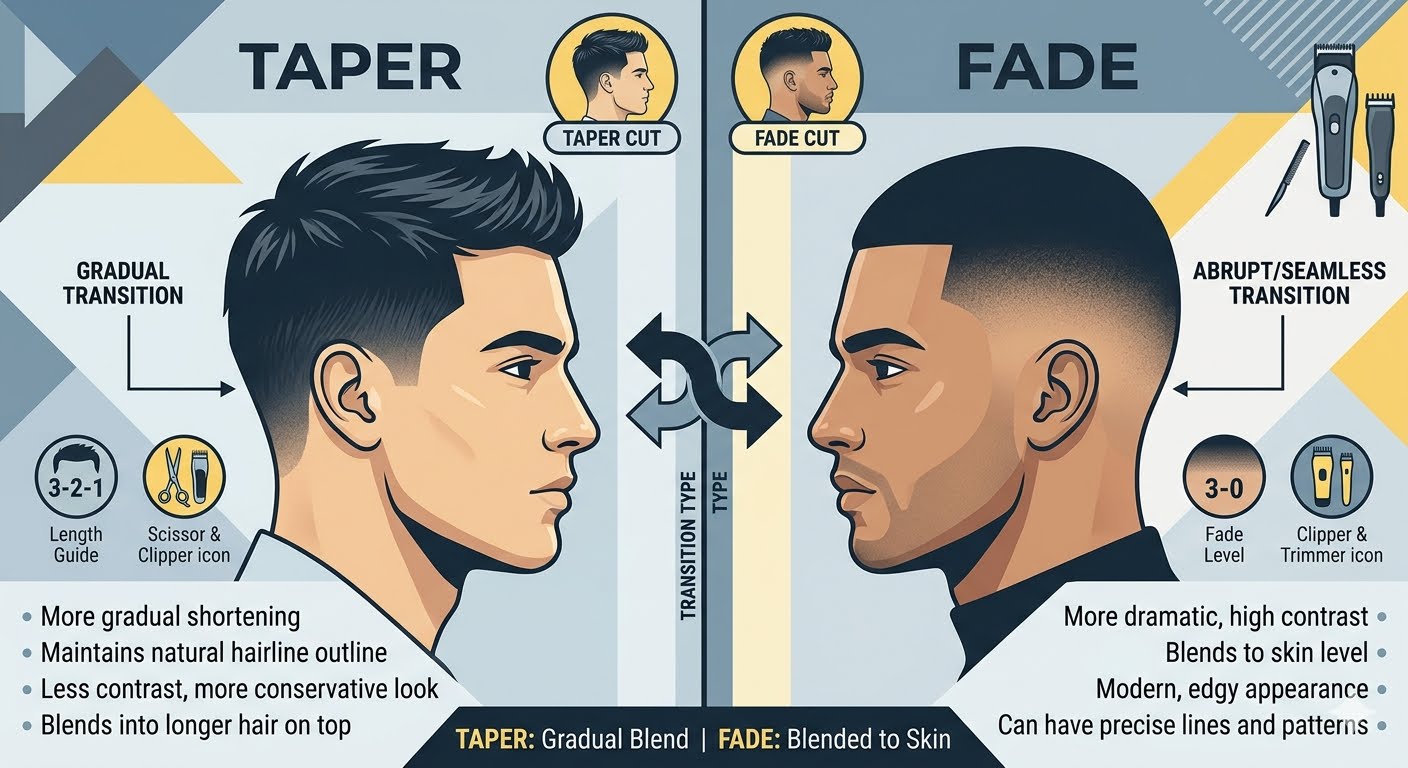
A taper haircut is a hairstyle where the hair gradually becomes shorter as it moves down the sides and back of the head. The transition is subtle and smooth, creating a natural appearance without exposing too much scalp.
The defining feature of a taper haircut is its conservative and balanced look. The hair near the neckline and around the ears is trimmed shorter than the hair on the upper sections, but the change is not dramatic.
Taper haircuts have been popular for decades because they offer a clean and professional appearance. They work well in business environments, schools, and formal settings while still maintaining a modern touch.
One reason for the popularity of taper haircuts is their versatility. They can be combined with many hairstyles, including side parts, pompadours, textured crops, and classic comb-overs.
What Is a Fade Haircut?
A fade haircut is a more dramatic version of gradual hair shortening. In a fade, the hair transitions from longer lengths at the top to very short or even skin-level lengths near the sides and back.
The fade creates a sharp contrast between the top and lower sections of the hair. Depending on the style, the fade can begin high, mid, or low on the head.
Fade haircuts are known for their modern, fashionable appearance. They have become highly popular in contemporary men’s grooming because of their clean finish and stylish look.
Unlike a taper, a fade often exposes more of the scalp and creates a stronger visual effect. This makes fade haircuts ideal for individuals who want a bold and trendy hairstyle.
The Main Difference Between Taper and Fade
Although taper and fade haircuts share taper vs fade similarities, the primary difference lies in the intensity of the transition.
A taper haircut gradually shortens the hair near the neckline and ears while maintaining noticeable length throughout most of the sides and back. The transition is subtle and natural.
A fade haircut, on the other hand, creates a more dramatic change in length. The hair often becomes extremely short or blends directly into the skin. The contrast between the longer top and shorter sides is much more noticeable.
In simple terms, every fade is a type of taper because it involves gradual shortening, but not every taper is a fade. A taper maintains more hair and appears more conservative, while a fade creates a sharper and more modern appearance.
The History of Taper Haircuts
The taper haircut has a long history in men’s grooming. It became particularly popular during the early and mid-twentieth century when professional appearance and neat grooming standards were highly valued.
Military haircuts often featured tapering techniques because they created a clean and disciplined look. Over time, barbers adapted the style for civilian use, making it one of the most common hairstyles worldwide.
The classic taper remains popular today because it balances tradition and modern fashion. It continues to be a preferred choice for professionals, students, and individuals seeking a timeless hairstyle.
The Rise of Fade Haircuts
Fade haircuts gained significant popularity during the late twentieth century, especially within urban fashion and hip-hop culture. Skilled barbers began experimenting with different fading techniques, creating styles that emphasized precision and creativity.
As social media and celebrity culture expanded, fade haircuts became taper vs fade mainstream. Athletes, musicians, actors, and influencers frequently showcased unique fade variations, increasing their popularity worldwide.
Today, fades are considered one of the most requested haircut styles in modern barber shops.
Types of Taper Haircuts
Taper haircuts come in several variations that allow individuals to personalize their appearance. A low taper creates a subtle transition near the neckline and ears, making it ideal for professional environments.
A classic taper provides a balanced look with gradual shortening along the sides and back. It works well with both short and medium-length hairstyles.
A long taper maintains more hair throughout the sides while still creating a clean finish. This option is perfect for individuals who prefer a more natural appearance without dramatic contrast.
Each variation offers a polished look while maintaining the defining characteristics of a taper haircut.
Types of Fade Haircuts
Fade haircuts also offer several unique variations. A low fade begins the transition close to the ears and neckline, creating a softer appearance compared to other fades.
A mid fade starts higher on the head and provides a balanced contrast taper vs fade between the top and sides. It is one of the most versatile fade options.
A high fade creates a dramatic transition and emphasizes the hairstyle on top. This style is popular among those who want a bold and fashionable appearance.
A skin fade takes the transition down to bare skin, creating the cleanest and sharpest look possible. This variation requires precision and regular maintenance.
Choosing the Right Haircut for Your Face Shape
Face shape plays a major role in determining which haircut works best. Individuals with round faces often benefit from fade haircuts because the contrast creates the illusion of greater height and definition.
Those with oval faces can successfully wear both taper and fade styles because their balanced facial proportions complement various haircuts.
Square face shapes often pair well with taper haircuts, which highlight strong jawlines while maintaining a refined appearance.
People with longer face shapes may prefer low fades or classic tapers to avoid adding excessive height to the overall look.
Understanding face shape helps create a haircut that enhances natural features and improves overall appearance.
Maintenance Requirements
Maintenance is an important factor when choosing between a taper and a fade. Taper haircuts generally require less frequent barber visits because the gradual transition remains attractive even as the hair grows.
Fade haircuts require more regular maintenance to preserve their sharp appearance. Since fade staper vs fade rely heavily on precise transitions, hair growth can quickly reduce the clean effect.
Individuals with busy schedules may prefer tapers because they are easier to maintain. Those who prioritize a consistently polished and fashionable appearance may find the additional maintenance of fades worthwhile.
Professional Versus Casual Appearance
Taper haircuts are often associated with professional settings because of their conservative and classic style. They are suitable for corporate environments, academic institutions, and formal occasions.
Fade haircuts offer a more contemporary appearance and are often associated with modern fashion trends. While many fades remain appropriate for professional settings, some high fades and skin fades may appear more casual or fashion-focused.
The choice depends largely on personal style, workplace expectations, and grooming preferences.
The Influence of Modern Barbering
Modern barbering has transformed both taper and fade haircuts into highly customizable styles. Skilled barbers can adjust transitions, blend techniques, and hair lengths to create personalized looks.
Social media platforms have also contributed to the taper vs fade popularity of these styles by showcasing creative barbering techniques and inspiring new trends.
As grooming standards continue to evolve, both tapers and fades remain among the most requested haircuts worldwide.
Which Haircut Is Best for You?
The decision between a taper and a fade depends on individual preferences and lifestyle. If you prefer a timeless, professional, and low-maintenance haircut, a taper may be the ideal choice.
If you enjoy modern fashion trends, sharp lines, and bold contrasts, a fade may better suit your style. Both haircuts offer versatility and can be adapted to various hair textures and lengths.
Consulting an experienced barber can help determine which option complements your facial features, hair type, and personal goals.
Conclusion
The debate between taper vs fade continues because both haircuts offer unique advantages. A taper provides a clean, classic, and professional appearance that remains stylish across generations. A fade delivers a sharp, modern, and eye-catching look that reflects contemporary grooming trends.
Understanding the differences between these two popular taper vs fade hairstyles allows individuals to make informed decisions based on their preferences, maintenance requirements, and lifestyle. Whether you choose a taper or a fade, both styles can enhance your appearance and boost confidence when performed by a skilled barber.
Ultimately, the best haircut is the one that matches your personality, complements your features, and helps you feel your best every day.