
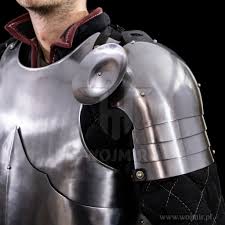
Throughout history, armor has played a crucial role in protecting warriors during battle. Among the many components of medieval armor, pauldrons stand out as one of the most recognizable and important pieces. Designed to protect the shoulders and upper arms, became a symbol of strength, nobility, and military excellence. They were not only functional but also served as decorative elements that reflected the status and identity of the wearer.
The image of a knight clad in shining armor is incomplete without the distinctive shoulder guards known as pauldrons. These armor pieces evolved over centuries as warfare changed and armor-making techniques improved. Today, pauldrons remain an enduring symbol of medieval culture and continue to appear in films, video games, fantasy literature, and historical reenactments.
Understanding the history and significance of pauldrons provides valuable insight into medieval warfare, craftsmanship, and the cultural importance of armor during one of the most fascinating periods in human history.
What Are Pauldrons?
Pauldrons are pieces of armor designed to protect the shoulders and upper arms of a warrior. They are typically attached to a breastplate or other parts of a suit of armor and cover one or both shoulders. Their primary purpose was to defend against sword strikes, arrows, spears, and other battlefield threats.
Unlike simple shoulder guards, were often made from multiple overlapping metal plates. This design allowed warriors to move their arms freely while maintaining a high level of protection. The flexibility provided by these layered plates made highly effective in combat situations.
Over time, pauldrons became more sophisticated and elaborate. Some were decorated with engravings, crests, or symbols that represented noble families, military orders, or kingdoms. As a result, they served both practical and ceremonial functions.
The Origins of Pauldrons
The development of pauldrons can be traced back to the gradual evolution of armor during the Middle Ages. Early warriors relied on chainmail and simple protective garments, which provided limited defense against powerful weapons.
As metalworking techniques improved, armorers began creating plate armor that offered greater protection. The shoulder area was particularly vulnerable during combat, making it necessary to develop specialized armor pieces for this region. Pauldrons emerged as a solution to this challenge.
By the fourteenth and fifteenth centuries, pauldrons had become a standard component of full plate armor. They were carefully designed to balance protection, mobility, and comfort, allowing knights to fight effectively without sacrificing movement.
The widespread use of reflected the increasing sophistication of medieval military equipment and the growing importance of armored cavalry on the battlefield.
The Design and Construction of Pauldrons
The construction of pauldrons required exceptional skill and craftsmanship. Armorers carefully shaped metal plates to fit the contours of the human body while ensuring maximum protection.
Most pauldrons consisted of several overlapping plates connected by rivets or leather straps. This arrangement allowed the armor to move naturally with the wearer’s shoulder and arm. The overlapping design also helped deflect blows and distribute impact forces across a larger surface area.
The materials used in pauldrons varied depending on the period and the wealth of the owner. Steel was the most common material due to its strength and durability. Wealthy knights often commissioned custom-made pauldrons featuring intricate decorations and polished finishes.
The process of creating involved heating, hammering, shaping, and polishing metal. Skilled armorers spent countless hours perfecting each piece to ensure both functionality and aesthetic appeal.
The Role of Pauldrons in Medieval Warfare
In medieval warfare, survival often depended on the quality of a warrior’s armor. The shoulders were particularly vulnerable because they were frequently targeted during combat. A well-designed pauldron could mean the difference between life and death.
Pauldrons protected warriors from a variety of weapons, including swords, axes, maces, and arrows. Their curved surfaces helped deflect attacks rather than absorbing the full force of a blow. This design reduced the likelihood of serious injury.
Mounted knights especially benefited from pauldrons because they were exposed to attacks from multiple directions while riding into battle. The added protection provided confidence and allowed them to engage enemies more aggressively.
Beyond physical protection, also contributed to the intimidating appearance of armored knights. Large, imposing shoulder armor could make a warrior appear more powerful and formidable, influencing the psychological aspects of combat.
Pauldrons and Social Status
During the Middle Ages, armor often reflected a person’s social standing. Wealthy nobles and knights could afford high-quality armor crafted by skilled artisans, while ordinary soldiers typically relied on simpler protective equipment.
Pauldrons became a visible symbol of status and prestige. Elaborately decorated shoulder armor demonstrated wealth, influence, and military achievement. Noble families often incorporated heraldic designs into their armor, turning into expressions of personal and family identity.
Tournament armor frequently featured highly decorative pauldrons designed to impress spectators and showcase the wearer’s status. These ceremonial pieces sometimes emphasized appearance over practicality, highlighting the cultural significance of armor beyond its military function.
The association between and nobility helped establish their iconic place in medieval imagery.
The Evolution of Pauldrons Through the Centuries
As warfare evolved, so did armor design. Early pauldrons were relatively simple, focusing primarily on protection. However, advances in weaponry and armor-making techniques led to increasingly complex designs.
By the late medieval period, pauldrons had become larger and more articulated. Some designs extended down the upper arm and included additional protective elements. Armorers continually experimented with new shapes and configurations to improve both defense and mobility.
The introduction of firearms gradually reduced the effectiveness of traditional plate armor. As guns became more powerful and widespread, heavy armor became less practical. Consequently, the use of pauldrons declined along with other components of full plate armor.
Despite their reduced military relevance, pauldrons remained important in ceremonial and decorative contexts for many years.
Pauldrons in Modern Popular Culture
Although medieval warfare has long disappeared, pauldrons continue to capture the imagination of people around the world. They are frequently featured in movies, television series, fantasy novels, and video games.
Fantasy characters often wear exaggerated that symbolize strength, heroism, or authority. These oversized shoulder pieces have become a visual shorthand for powerful warriors and legendary heroes. Popular fantasy franchises regularly incorporate pauldrons into their character designs.
Historical films and reenactments also showcase pauldrons as part of authentic medieval armor. Their distinctive appearance helps audiences instantly recognize knights and warriors from the Middle Ages.
The continued popularity of demonstrates their enduring appeal as symbols of courage and martial excellence.
The Influence of Pauldrons on Fashion and Design
The impact of pauldrons extends beyond historical armor and fantasy entertainment. Elements of shoulder armor have influenced fashion design, costume creation, and artistic expression.
Fashion designers occasionally draw inspiration from medieval armor when creating bold and dramatic garments. Structured shoulders, metallic accents, and armor-like silhouettes can often be traced back to the visual influence of pauldrons.
Costume designers for theater, film, and cosplay frequently use pauldrons to create memorable and visually striking characters. Their ability to convey strength and authority makes them a valuable design element.
The artistic legacy of highlights their versatility and enduring relevance in modern creative fields.
The Importance of Preserving Medieval Armor
Museums and historical institutions around the world work to preserve examples of medieval armor, including pauldrons. These artifacts provide valuable insights into the craftsmanship, technology, and culture of the Middle Ages.
Studying historical helps researchers understand how armor evolved and how medieval societies approached warfare and personal protection. Preservation efforts ensure that future generations can appreciate these remarkable achievements of engineering and artistry.
Historical reenactment groups also play an important role in keeping the legacy of pauldrons alive. By recreating authentic armor and demonstrating medieval combat techniques, they help educate the public about this fascinating aspect of history.
Conclusion
Pauldrons are far more than simple pieces of shoulder armor. They represent centuries of military innovation, artistic craftsmanship, and cultural significance. Designed to protect warriors in battle, pauldrons became symbols of strength, honor, and nobility throughout the medieval world.
Their influence extends far beyond the battlefield. From historical museums and reenactments to fantasy literature, video games, and modern fashion, continue to inspire people around the globe. Their distinctive appearance and rich history ensure that they remain one of the most recognizable elements of medieval armor.
As symbols of courage, protection, and craftsmanship, pauldrons occupy a unique place in human history. Their lasting legacy serves as a reminder of the ingenuity and creativity that defined the medieval age and continues to captivate modern audiences.