
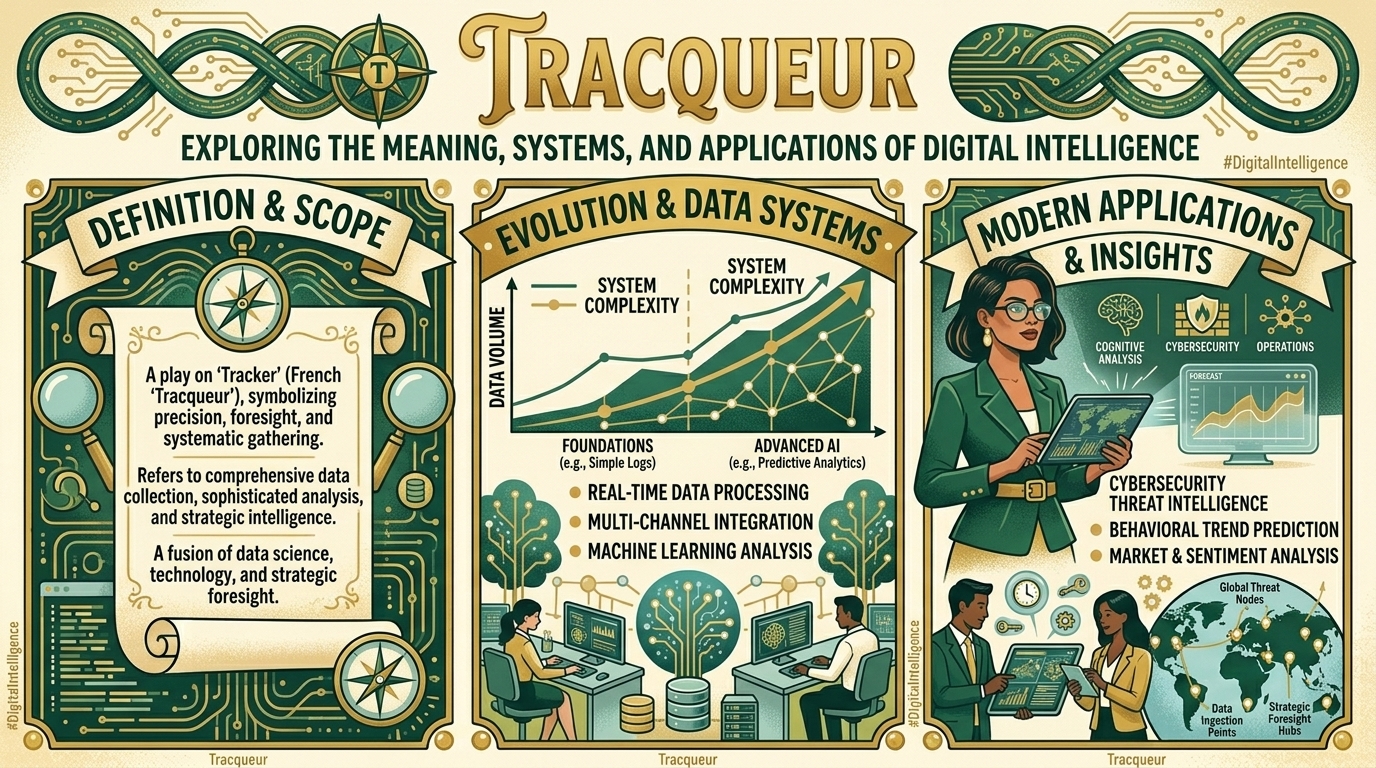
In the modern digital era, data has become one of the most valuable assets in the world. Every action, whether online or offline, produces information that can be analyzed and used for better decision-making. Within this evolving environment, the concept of Tracqueur has emerged as a modern representation of tracking systems that help individuals and organizations monitor activities, analyze performance, and improve efficiency.
Tracqueur represents more than just a simple tracking tool. It symbolizes an advanced approach to digital monitoring where information is collected, processed, and transformed into meaningful insights. From business operations to personal productivity, tracking systems like Tracqueur are shaping how people understand and interact with data in real time.
As technology continues to advance, the demand for smarter tracking solutions is increasing. Companies and individuals want accurate, fast, and reliable systems that can help them make informed decisions. Tracqueur fits into this need by offering a conceptual framework for modern tracking solutions that combine data analytics, automation, and intelligent reporting.
The Meaning and Concept of Tracqueur
The term Tracqueur can be understood as a modern interpretation of tracking and monitoring systems designed for digital environments. It represents tools and technologies that allow continuous observation of data streams and user activities.
In simple terms, Tracqueur refers to any system that collects information about movement, behavior, performance, or processes and presents it in an organized and understandable format. This can include website analytics, GPS tracking, business performance monitoring, or even personal habit tracking applications.
The core idea behind Tracqueur is to transform raw data into useful insights. Instead of just collecting numbers or logs, it focuses on interpreting data in a way that supports better decision-making and improved outcomes.
Evolution of Tracking Systems
Tracking systems have evolved significantly over the past few decades. In earlier times, data tracking was limited to manual record-keeping and basic monitoring tools. Businesses relied on spreadsheets and physical reports to analyze performance.
With the rise of computers and the internet, digital tracking systems became more advanced. Software applications were developed to monitor website traffic, customer behavior, financial transactions, and operational processes. These tools provided faster and more accurate data analysis compared to traditional methods.
Today, modern tracking systems like Tracqueur represent the next stage of this evolution. They combine artificial intelligence, cloud computing, and real-time analytics to deliver highly detailed insights. This evolution has made it possible to track complex systems across multiple platforms simultaneously.
Importance of Tracqueur in the Digital World
In today’s competitive environment, information is essential for success. Businesses, organizations, and individuals rely on data to make strategic decisions. Tracqueur plays an important role in this process by providing structured and meaningful data analysis.
One of the key advantages of such tracking systems is improved decision-making. When accurate data is available, organizations can identify trends, understand customer behavior, and adjust their strategies accordingly.
Another important aspect is efficiency. Tracqueur helps reduce manual effort by automating data collection and reporting processes. This allows teams to focus more on analysis and action rather than spending time gathering information.
Additionally, tracking systems enhance transparency. Whether it is a business monitoring employee performance or a logistics company tracking shipments, real-time data ensures accountability and clarity in operations.
How Tracqueur Works in Modern Systems
Tracqueur operates through a combination of data collection, processing, and visualization. The system gathers information from various sources such as devices, applications, sensors, or online platforms.
Once the data is collected, it is processed using analytical tools that filter and organize the information. This step is crucial because raw data is often unstructured and difficult to interpret. Processing transforms it into meaningful patterns and trends.
After processing, the data is presented through dashboards, reports, or visual graphs. This allows users to easily understand complex information without needing technical expertise. The goal is to make data accessible and actionable for decision-making purposes.
Modern Tracqueur systems often use automation and artificial intelligence to improve accuracy and speed. These technologies help identify patterns that may not be visible through manual analysis.
Applications of Tracqueur in Business
In the business world, Tracqueur plays a vital role in improving performance and efficiency. Companies use tracking systems to monitor sales, customer behavior, employee productivity, and financial performance.
For example, in marketing, tracking tools help businesses understand how customers interact with advertisements and websites. This information allows companies to create better marketing strategies and improve customer engagement.
In supply chain management, tracking systems are used to monitor the movement of goods from production to delivery. This ensures timely delivery and reduces the risk of errors or delays.
Human resource departments also benefit from tracking systems by analyzing employee performance and attendance. This helps organizations maintain productivity and identify areas for improvement.
Overall, Tracqueur enhances business intelligence by providing real-time insights that support better decision-making and strategic planning.
Role of Tracqueur in Technology and Data Analytics
Technology and data analytics are at the core of modern tracking systems. Tracqueur integrates advanced technologies such as artificial intelligence, machine learning, and cloud computing to process large volumes of data efficiently.
Data analytics plays a key role in identifying patterns, trends, and anomalies. By analyzing this information, organizations can predict future outcomes and make proactive decisions.
Machine learning further enhances tracking systems by allowing them to learn from past data and improve accuracy over time. This makes Tracqueur more intelligent and adaptive in dynamic environments.
Cloud computing ensures that data can be stored and accessed from anywhere in the world. This flexibility is essential for global businesses and remote operations.
Tracqueur in Personal Productivity
Tracking systems are not limited to businesses. Individuals also use similar tools to improve personal productivity and manage daily activities.
Tracqueur-like applications can help users monitor habits, track fitness goals, manage time, and organize tasks. By analyzing personal data, individuals can identify patterns in their behavior and make positive changes.
For example, someone trying to improve productivity can use tracking tools to understand how time is spent throughout the day. This allows them to eliminate distractions and focus on important tasks.
Fitness tracking is another popular application. Users can monitor steps, exercise routines, and health metrics to maintain a healthy lifestyle.
Challenges and Limitations of Tracqueur Systems
Despite their advantages, tracking systems also face certain challenges. One of the main concerns is data privacy. Since these systems collect large amounts of personal and organizational data, ensuring security is essential.
Another challenge is data accuracy. If the collected information is incorrect or incomplete, it can lead to wrong conclusions and poor decision-making.
Complexity is also a limitation in some cases. Advanced tracking systems may require technical knowledge to operate effectively, which can be difficult for beginners.
Additionally, over-reliance on data can sometimes reduce human judgment. While data is important, it should always be balanced with experience and critical thinking.
Future of Tracqueur and Tracking Technologies
The future of tracking systems looks highly advanced and promising. As technology continues to evolve, Tracqueur-like systems will become more intelligent, automated, and user-friendly.
Artificial intelligence will play a major role in improving predictive analytics. Systems will not only analyze past data but also predict future outcomes with greater accuracy.
The Internet of Things (IoT) will further expand tracking capabilities by connecting devices and enabling real-time data exchange. This will create a more interconnected digital environment.
Privacy and security improvements will also be a major focus in the future. Developers will work on creating safer systems that protect user data while still providing valuable insights.
Conclusion
Tracqueur represents the modern evolution of tracking and data analysis systems in the digital age. It combines technology, intelligence, and automation to provide meaningful insights from complex data.
From business operations to personal productivity, tracking systems have become essential tools in today’s world. They help improve decision-making, increase efficiency, and enhance overall performance.
While challenges such as privacy and data accuracy remain, continuous technological advancements are making these systems more reliable and powerful.
In the future, Tracqueur and similar technologies will play an even more important role in shaping how individuals and organizations understand and use data, making the digital world more connected and intelligent than ever before.